by AEIDL
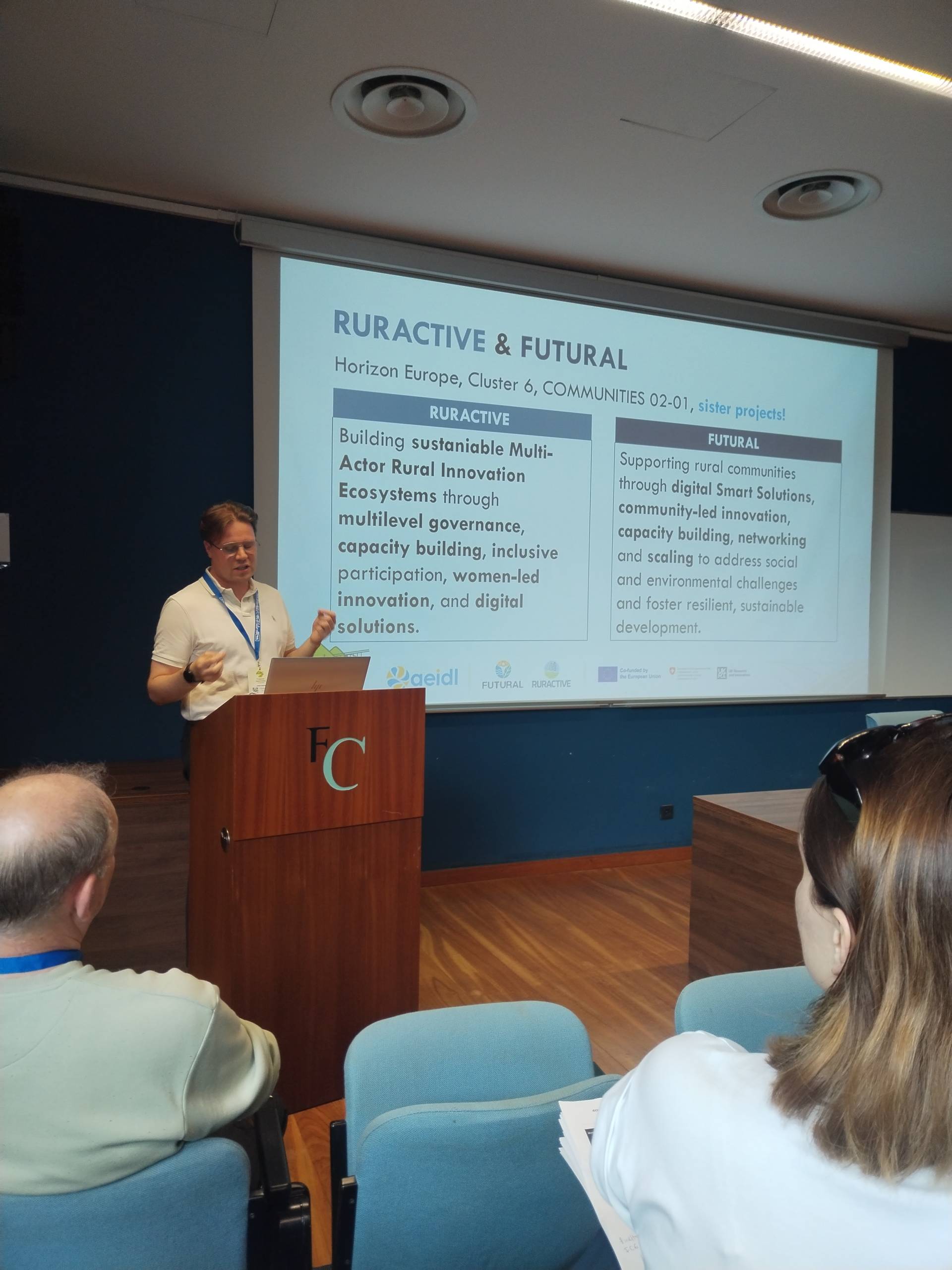
FUTURAL entered its final project year by situating its emerging findings within wider academic and policy discussions on rural innovation. This included joint participation with its sister project RURACTIVE at the 4th European Rural Geographies Conference in Porto, held on 22–26 June 2026, under the session “Digital Transition, Innovation and Rural Infrastructures.” The joint presentation, “Smart rural governance: barriers, drivers and enabling conditions,” was delivered by Janne Sinerma and María Alonso-Roldán (AEIDL) and brought together evidence from both projects on the governance conditions shaping rural innovation processes.
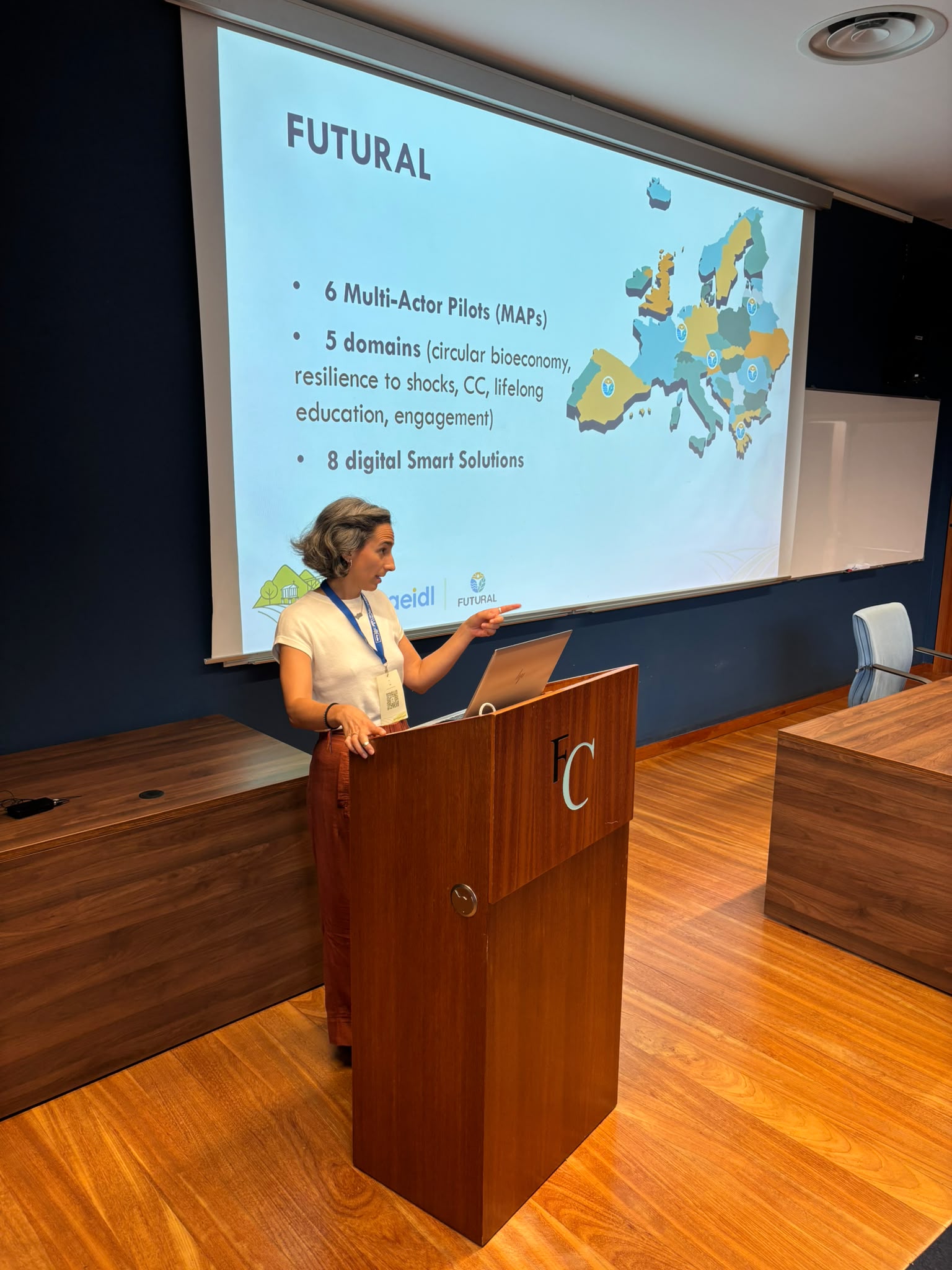
Key barriers identified included governance fragmentation across EU, national and local levels; complex funding and administrative structures; and limited local capacities in terms of skills, resources and facilitation. At the same time, key drivers emerging from both projects included the role of ecosystems for rural innovation and intermediary actors in connecting stakeholders, the importance of multi-level coordination, and the added value of flexible, place-based approaches that support co-creation with local communities.
FUTURAL findings from its Multi-Actor Pilots (MAPs) and RURACTIVE Dynamos showed alignment with several contributions presented in other sessions, particularly on place-based digital and social innovation. These reinforced the importance of governance frameworks, intermediary structures and territorial conditions in enabling rural innovation. Relevant perspectives included Smart Villages delivered by seven LAGs in Poland, the GUARDIANS project on co-creation and digital tool uptake, research on rural living labs and multi-level governance, and work on functional rural areas and digital inclusion.on co-creation and digital tool uptake, research on rural living labs and multi-level governance, and work on functional rural areas and digital inclusion.
Across these contributions, a shared understanding emerged: rural innovation is shaped less by individual solutions than by the governance arrangements, capacities and territorial conditions that enable implementation, uptake and long-term sustainability. These insights are directly informing FUTURAL policy outputs, including policy recommendations and governance frameworks which will be presented at the 3rd EU Rural Innovation Forum in Pongau (Austria) in spring 2027.